
Composite Barrel- Modern advancements in small arms.
Updated: Jul 18

Weapons required now a days should be light weight and must have high firepower so designers are in search of materials which are light weight even a mix of two or more material may do the job. A lightweight body will be easy to carry and fire for long time.
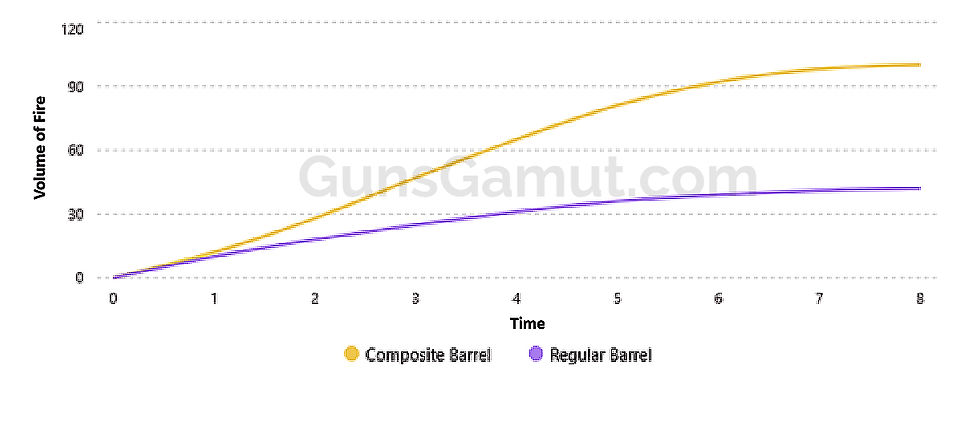
Similarly a composite barrel has the advantage over normal barrel that by using a composite barrel a high volume of fire can be achieved for a longer time .
Barrel is one of the most important part of small arm. Barrel materials must tolerate high heat, erosion, and fatigue while maintaining accuracy and reasonable weight. Barrel materials range from traditional steels to high-temperature alloys and advanced composites Body materials focus on high-strength, low-weight composites and polymers , high-performance polymers and hybrid metal-polymer structures. We compare barrels on thermal (conductivity, expansion, specific heat) and mechanical (strength, density) metrics (Table 1) and discuss manufacturing, coatings, and trade-offs. Key findings: multi-layer composite barrel jackets “Composite Heat Release” can lower bore temperature and weight. metal coatings on carbon-fiber wraps improve heat conduction from the metal bore. High-strength metals remain baseline , but alloys and ceramics offer higher temperature limits at cost of weight or brittleness. For receiver/bodies, carbon-fiber and metal composites standard alloys and other polymers add toughness and manufacturability.
Material | Thermal Cond (W/mK) | cₚ (J/kgK) | Melting Pt (°C) | Tensile (MPa) | Density (g/cc) | Thermal Exp (μm/m·°C) | Cost ($/kg) |
Steel alloy | 40..2 | 480 | 1416 | 588(hardened) | 7.85 | 10.8 | ~3 |
Stainless | 15-21 | 460 | 1400 | ~1000 (H7800) | 7.8 | ~10.8 | 7 |
Composite 1 | 16 | 450 | 1260 | ~1200 (peak) | 8.19 | ~13.0 | 32 |
Composite 2 | 8.7 | 560 | 1660 | ~900 | 4.43 | ~8.7–9.1 | ~30 |
Composite 3 | 81 | 170 | 2870 | ~600 | 14.0 | ~5.1 | ~40 |
Composite 4 | 112 | 670 | 2730 | ~350 | 3.21 | ~4.0 | ~20 |
Barrel Performance Requirements: Barrels must endure cyclic internal pressures and rapid heating. Typical bore temperatures in sustained fire can exceed 300–400 °C, inducing thermal fatigue (cracking) and erosion (metal loss by hot gas/abrasion). Material must maintain yield strength under heat . Thermal conductivity and specific heat are critical: high conductivity and heat capacity disperse heat away from the bore. Avient’s “Composite Heat Release” technology exemplifies this: multi-layer composite fiber jacket conducts heat radially outwards, lowering bore temperature over multiple rounds. Thermal expansion also matters: mismatches can warp under heat, degrading accuracy. Coefficient of thermal expansion (CTE) of metal vs composite can induce stress; careful fiber orientation and bonding are needed (see patents on winding angles.
Illustrative Volume of Fire vs Time
Conceptual normalized comparison. Values are illustrative only and do not represent measured performance.

Comments