
Beginner Firearms Training: Where Do I Start? A Complete Beginner's Guide
# Beginner Firearms Training: Where Do I Start?
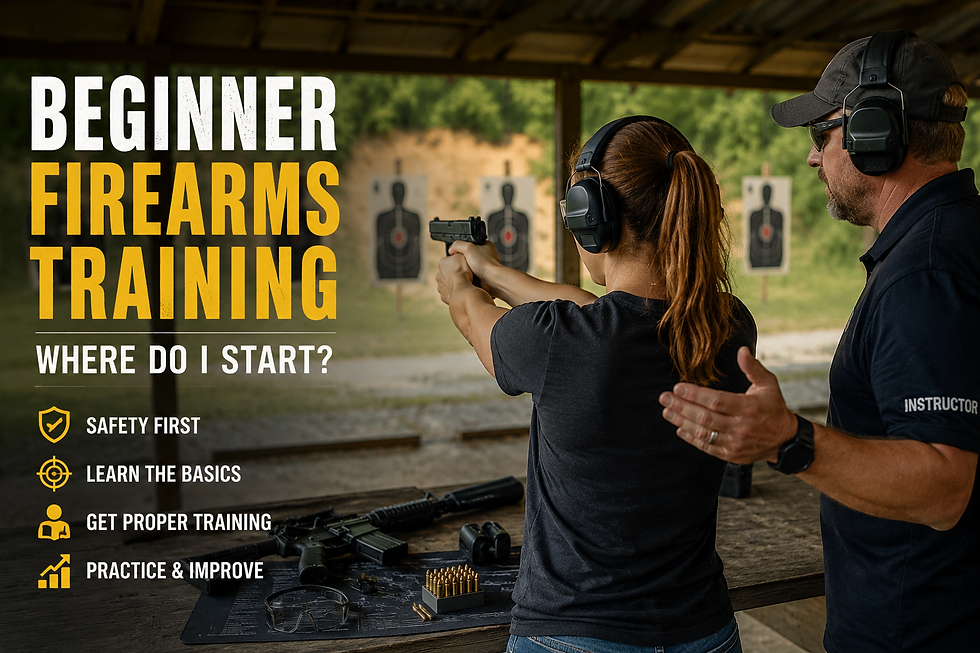
Thinking about getting into shooting sports or learning how firearms work? You're not alone. One of the most common questions new shooters ask is, **"Where do I start with beginner firearms training?"**
The answer is simpler than you might think. You don't need expensive gear or years of experience to begin. What you do need is the right mindset, a commitment to safety, and a willingness to learn from reliable sources.
In this guide, we'll walk through the basics of **beginner firearms training** so you can build confidence and develop safe habits from day one.
---
Safety Always Comes First
Before you ever load a firearm or step onto a shooting range, take time to learn the four universal firearm safety rules.
- Treat every firearm as if it is loaded.
- Never point the muzzle at anything you don't intend to shoot.
- Keep your finger off the trigger until you're ready to fire.
- Be sure of your target and what is beyond it.
These rules are simple, but they're the foundation of responsible firearm ownership. Experienced shooters follow them every single time they handle a firearm.
---
Learn the Basics Before You Buy
A common mistake many beginners make is rushing out to purchase a firearm before understanding how one operates.
Instead, spend some time learning the basics:
- How different types of firearms work
- Basic firearm terminology
- Safe handling procedures
- Loading and unloading techniques
- Proper storage practices
Many shooting ranges also offer rental firearms, giving you the opportunity to try different models before making a purchasing decision.
---
Take a Beginner Firearms Training Course
While YouTube videos and online articles are helpful, nothing replaces hands-on instruction from a qualified firearms instructor.
A good **beginner firearms training** course usually includes:
- Firearm safety
- Proper handling techniques
- Loading and unloading
- Basic marksmanship
- Range etiquette
- Cleaning and maintenance
Learning from an instructor also allows you to ask questions and receive immediate feedback.
---
Wear the Right Safety Equipment
Every range session should begin with proper protective equipment.
At minimum, you'll need:
- Eye protection
- Hearing protection
- Closed-toe shoes
- Comfortable clothing
Protective gear isn't optional—it's part of responsible firearms training.
---
Focus on the Fundamentals
Don't worry about shooting quickly or hitting tiny targets right away.
Every skilled shooter started by mastering the basics.
Focus on improving:
-Grip
A consistent grip helps control recoil and improves accuracy.
-Stance
Stand in a balanced, comfortable position that allows you to control the firearm safely.
-Sight Alignment
Learn how to properly align your sights before pressing the trigger.
-Trigger Control
A smooth trigger press often has a greater impact on accuracy than beginners realize.
These simple fundamentals will help you progress much faster than trying advanced techniques too early.
---
6. Visit a Reputable Shooting Range
Your first trip to the range doesn't have to be intimidating.
Most ranges welcome beginners and often have staff available to answer questions.
When visiting a range:
- Listen carefully to the range officer.
- Follow all posted safety rules.
- Ask questions if you're unsure.
- Never handle firearms when people are downrange.
Respecting range rules creates a safer environment for everyone.
---
Practice Regularly
Like any new skill, consistency matters.
You don't need to fire hundreds of rounds every weekend. Even occasional practice sessions can help reinforce safe handling habits and improve your shooting fundamentals.
Many experienced shooters also practice dry-fire drills at home using safe procedures and an unloaded firearm.
---
Learn How to Maintain Your Firearm
Basic maintenance keeps your firearm functioning safely and reliably.
After each range session, become familiar with:
- Safe unloading procedures
- Cleaning the barrel
- Removing carbon buildup
- Proper lubrication
- Inspecting for wear
Always follow the manufacturer's instructions for cleaning and maintenance.
---
Continue Learning
The best shooters never stop learning.
As you gain experience, you can explore topics like:
- Marksmanship
- Ballistics
- Firearm optics
- Competition shooting
- Hunting
- Defensive shooting
- Firearm laws in your area
Every training session is an opportunity to improve both your skills and your understanding.
---
Common Beginner Mistakes
Everyone starts somewhere, but avoiding a few common mistakes can make learning easier.
Some of the most common include:
- Ignoring firearm safety rules
- Poor trigger discipline
- Rushing shots
- Buying a firearm before receiving instruction
- Skipping hearing and eye protection
- Not asking questions
Remember, even experienced shooters continue learning throughout their lives.
---
Comments